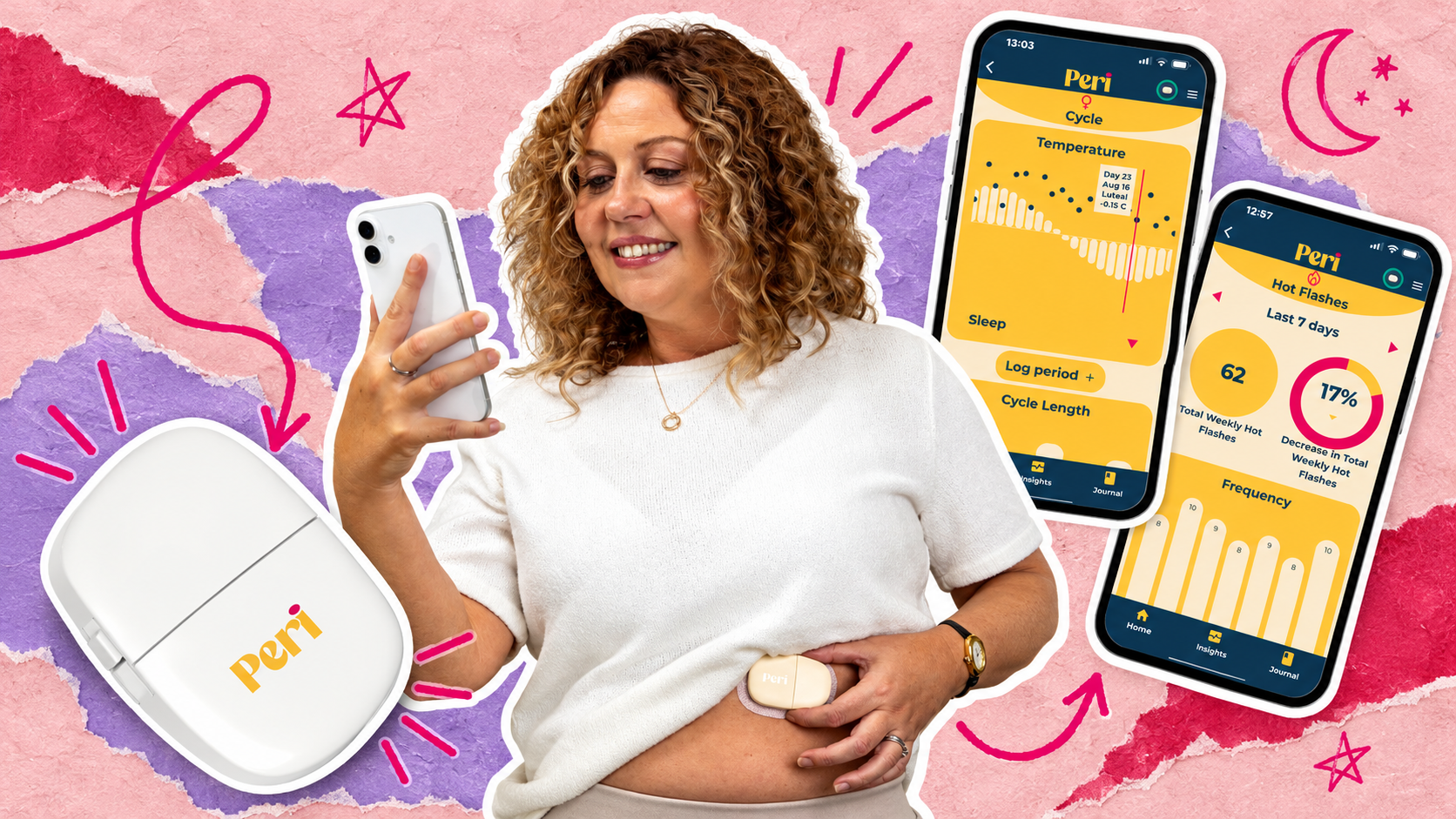
Peri, a Dublin-based women's health company, says its perimenopause wearable was named to TIME's Best Inventions of 2026 in the health and wellness category, according to the company's Oct. 15 announcement. The list features 300 innovations. Per Peri, TIME gathered nominations from its editors and correspondents worldwide and through an online application, then judged each contender on originality, efficacy, ambition and impact.
The company calls its device the first wearable and large-scale dataset dedicated to perimenopause, the transition before menopause.
The sensor is small and lightweight, worn directly under the breast and designed to stay on through workouts, sleep and showers. Placement is the point, per Peri: hot flashes and night sweats originate in the upper body, and the signals used to detect them fade toward the limbs, so the company says a ring or wrist-based device can't capture them accurately.
Peri says it spent five years building its AI platform and database from scratch, with every algorithm developed in-house and trained exclusively on continuous data from 204 women going through perimenopause during human trials. According to the company, the platform analyzes how symptoms, movement, sleep, medications, lifestyle factors and menstrual cycles interact, and a companion app delivers personalized insights weekly, monthly and cyclically.
Peri says 60% of women seek clinical help for perimenopause and 70% of them leave without answers. The company says the device lets a woman show her clinician how her hot flashes, night sweats, sleep and cycle have behaved over weeks and months, rather than describing symptoms from memory at a 15-minute appointment. Her clinician, Peri says, can then see whether a treatment like hormone therapy is working, at what dose, and how that changes over time.
On price, Peri's Oct. 15 announcement says the wearable costs $349 for "menopause month," with no subscription or recurring fees, and is FSA and HSA eligible.
The company, founded by scientists Heidi Davis and Dr. Donal O'Gorman, says it is already working with universities researching the link between midlife and long-term health, along with a number of clinics and women's health companies.
"For too long, women have gone through perimenopause flying blind, and it doesn't have to be that way," Davis, Peri's co-founder and CEO, said in the announcement. "We built Peri to give women real answers about their own bodies, and to build a dataset that can inform how healthcare serves women more broadly."