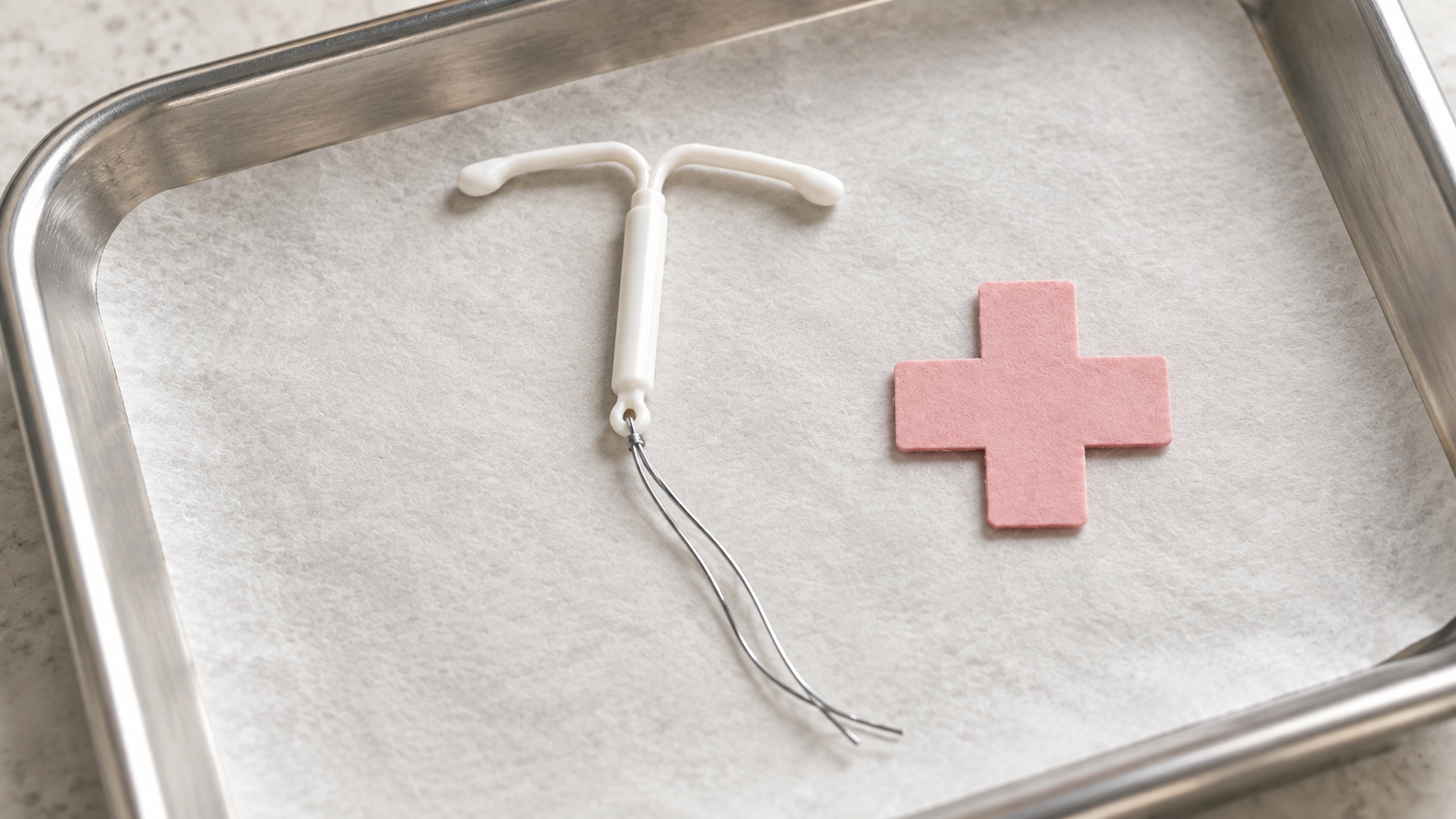
Two new studies in JAMA are taking IUD-insertion pain seriously, and both point to the same idea: pain relief for IUD placement shouldn't be one-size-fits-all.
Guidance from the American College of Obstetricians and Gynecologists calls the need for pain management during gynecologic procedures urgent but notes that studies haven't established a clear best approach, Medscape reports.
One of the new studies is a randomized, double-blind, placebo-controlled trial in Sweden. It enrolled 370 women ages 18 to 31 who had never given birth, at 11 clinics. Before IUD placement, participants received either the local anesthetic mepivacaine or saline, delivered into the uterus through a catheter.
On a 100-point pain scale, the mepivacaine group reported average scores of 44 during placement, versus 59 for the placebo group. They were also about half as likely to report severe pain: 18% versus 35%. Fewer said the procedure hurt more than they expected (15% versus 34%), and fewer had vasovagal reactions such as feeling faint (8% versus 18%). More said they would choose an IUD again (93% versus 82%).
"A pain score alone does not tell us how someone experienced the procedure," said Karin Elgemark, MD, PhD candidate at Danderyd Hospital, Karolinska Institutet, and first author of the study.
The second JAMA study asked a different question: when moderate IV sedation is routinely offered for IUD placement, how many people take it? Everyone was offered anti-inflammatory drugs and a lidocaine block around the cervix, plus the option of IV sedation with fentanyl and midazolam. A total of 269 patients, 20.3%, chose the sedation, Medscape also reports.
This was a look back at who picked sedation, not a test of whether sedation reduces pain, so it can't say the option works. Those who chose it were more likely to have never given birth (94% versus 85%), and more likely to have pelvic pain (6% versus 2%) or depression or anxiety (65% versus 46%).
"I have had patients cry tears of relief when I offered IV sedation for IUD insertion," said Michael Solotke, MD, of Northwestern University Feinberg School of Medicine, who was not involved in either study.
Not everyone needs extra help.
Medscape also quotes Bettina Böttcher, MD, coordinator of Germany's guideline on non-hormonal contraception, who said there wasn't enough data on mepivacaine when that guideline was written. A revision is scheduled for 2027, and she said studies published in the meantime will be considered.
Elgemark, Solotke and Storey reported no relevant financial conflicts.