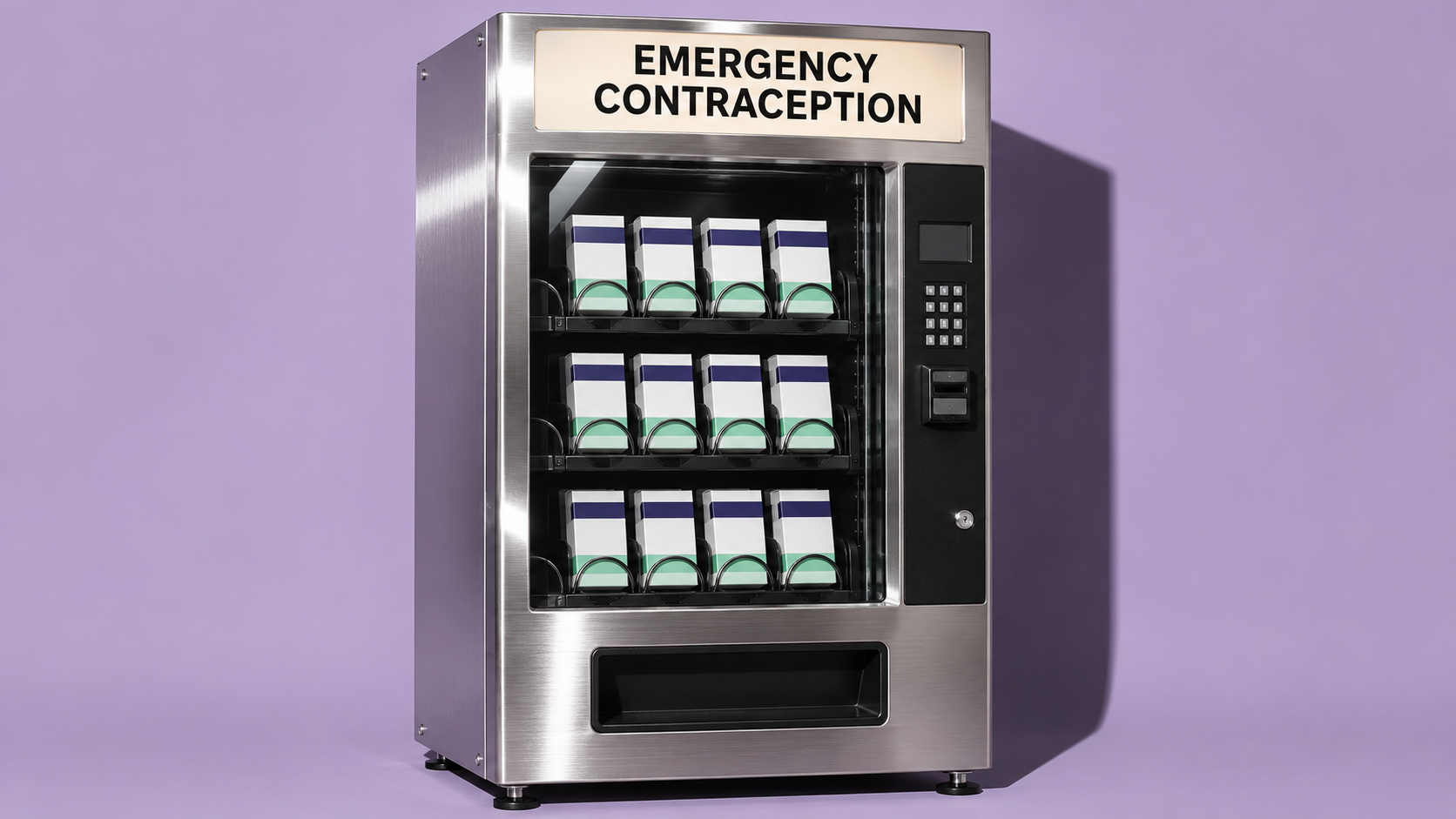
The New York City Council voted Nov. 19 to urge state lawmakers to require emergency contraception vending machines at SUNY and CUNY institutions offering in-person classes, backing a proposal that still needs action in Albany.
The resolution, sponsored by Council Member Jennifer Gutiérrez, calls on the state Assembly to pass the legislation and the governor to sign it. The council’s vote does not itself require campuses to install machines.
The vending machine has spent decades making chips accessible. Its résumé has room for reproductive health.
What would campuses have to provide?
The state proposal would require at least one machine selling emergency contraception at each SUNY state-operated institution and each CUNY institution offering in-person instruction.
Schools could use an existing machine or install a new one. It would need to be in a secure, accessible campus location, with that location posted on the institution’s website. The bill also requires original, tamper-proof packaging, proper storage and products within their expiration dates.
Knowing where to find the machine should not become an extracurricular research project.
The proposal makes the medication available for purchase. That is an access requirement, rather than a promise of free emergency contraception.
Albany still has work to do.
The state Senate has passed its version, according to Vending Times. The Assembly version, A9175, remains in the Higher Education Committee, according to the state legislature’s bill tracker.
For students, the distinction matters: A supportive resolution does not mean a machine will appear outside the library tomorrow. The council has formally asked the state to act.
Part of a broader reproductive health package
The council also approved legislation addressing information about doula care, including hospital access rights and Medicaid reimbursement. It would create a feedback process for doulas and a city doula advisory council.
A separate resolution calls for a refundable state tax credit for up to three IVF cycles not covered by insurance. Like the vending-machine resolution, that request requires state action.
The campus proposal is straightforward: Make emergency contraception easier to locate and purchase where students already spend their time.
The machine does not need a groundbreaking redesign. The legislation needs to move.