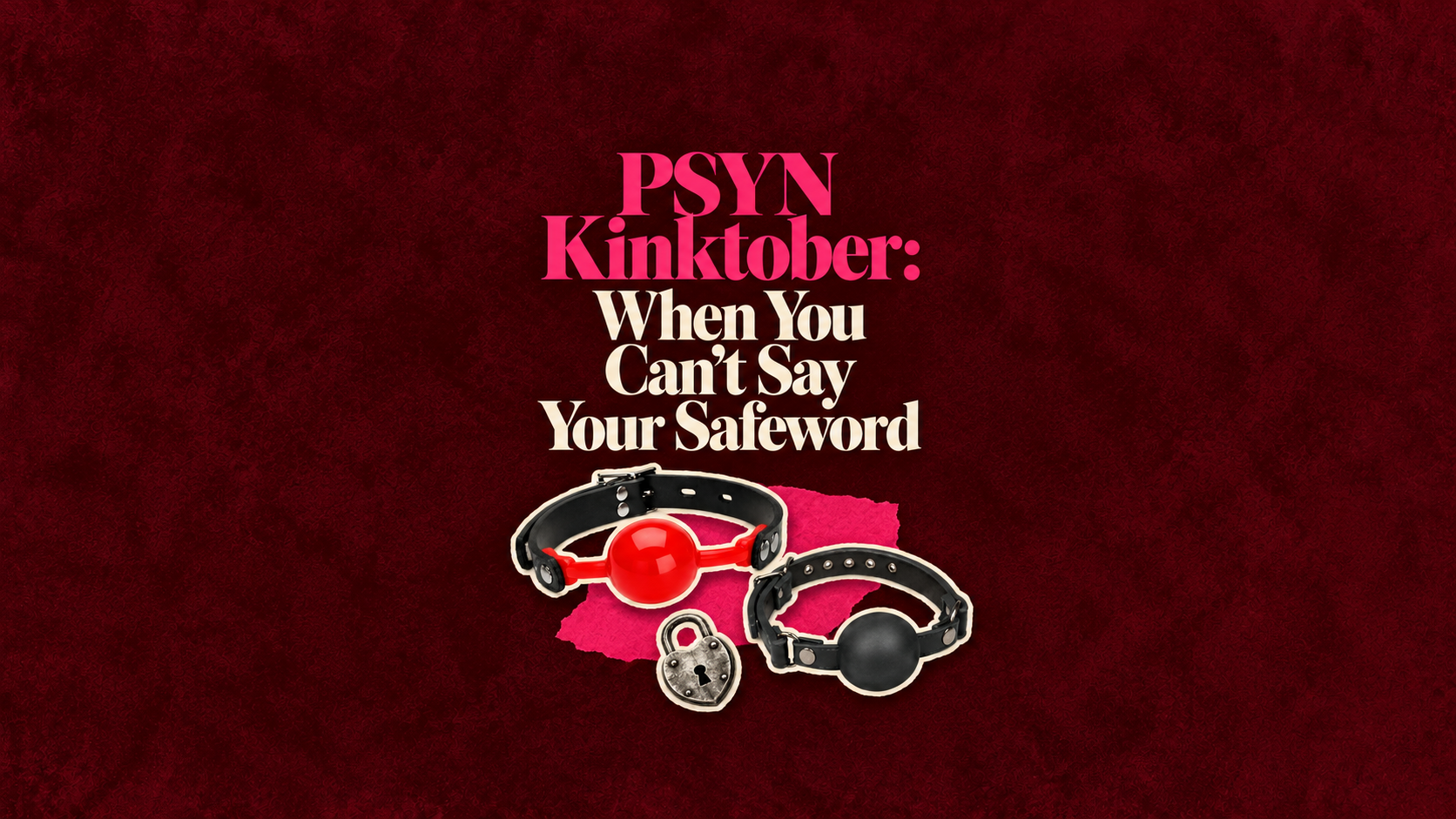
In some leather scenes, a padlock does the talking. A kink-education page from Hank Social, saved in July 2026, tells partners in interrogation scenes to have a gagged bottom hold a heavy object like a padlock. The page explains that if he drops it, "that’s your non-verbal safeword to pause or end the scene." The reason is mechanical: someone with a cleave gag or leather spider gag in his mouth cannot yell "Red."
A gag is the most literal way to quiet a mouthy partner in brat play and other power-exchange kink, and it also silences the one word built to stop the scene. Educators and therapists say the fix is settled long before anyone picks up a gag, and that it needs a backup.
Why You Can't Yell Red With a Mouthful
Some scenes already break the usual stop words before a gag goes on. In interrogation play, the Hank Social page says, the top acts ruthless and the bottom begs for mercy, so pairs need "an ironclad system" for knowing when play has to actually stop. The Gender & Sexuality Therapy Center, a therapy practice, wrote in 2022 that "no," "stop" and "don't" can fail in consensual non-consent play, the kind where partners act out a fantasy of refusal. Its therapists suggest a word unrelated to sex, such as pineapple or crocodile.
The center adds that breathing or speaking can be restricted in some kink play, and that safe signals matter most when one method of communication has been eliminated. A gag takes the pineapple away too. The pretend protests were never supposed to count, and now the real safe word can't get out either.
Padlocks, Taps and Squeaky Toys: The Signal Menu
The options are low-tech and chosen ahead of time. MasterClass, in a guide last updated in June 2021, says a ball gag makes speech impossible, so the wearer needs a non-verbal way to tell their partner to stop and take the gag out. Its examples: a hand signal, a tap on the back, or squeezing a squeaky toy. If the gagged partner is also tied up and can't use their hands, the guide suggests shaking their head "no" hard while grunting. It also says to agree on a time limit before starting, with ten to fifteen minutes a good first stretch, and never to leave a gagged partner alone.
The therapy center offers a way to keep the stoplight system alive without words. If you usually tap your partner's leg, it says, three taps could mean green, two taps yellow and one tap, the quickest and easiest, red. It also says some people choose both a verbal safe word and a non-verbal one as a backup, because some people go non-verbal when extremely aroused or overwhelmed.
Educator Lateef Taylor made a similar point to Healthline in 2020, saying it isn't uncommon to lose the ability to speak during a moment of bliss or sensation overload. He recommends a non-verbal safety word, for example four thigh taps or two snaps meaning stop.
When Rope Joins the Gag, Plan for Both
Rope stacks a second set of risks on top of the gag, and it can take away the hand signals a gag leaves. Gigi Engle, a sex educator and the author of Kink Curious, told Men's Journal in September 2026 that "Shibari is a skill-based practice with real physical risks, including nerve damage and circulation problems," and her pre-scene list starts with boundaries and a clear stop signal, then safety shears within reach. Numbness, tingling or weakness mean the rope comes off immediately.
A signal only helps if the top can act on it fast. Twisted Windows, a bondage-safety education site, advises always having a quick-release tool, and says a pocket knife is not a good one. It recommends safety shears with a blunt side that slides under the rope against the skin, and says to test them on the actual rope first, because many tools struggle with bondage materials, especially synthetics.
A Signal Is a Backup, Not a Babysitter
Even a perfect signal can vanish from memory mid-scene. The therapy center describes subspace as a rush of endorphins that can blunt a sub's sense of limits or pain and even make them forget the agreed safe word. Its therapists write: "Having check-ins throughout play is critical in addition to safe words." Hank Social tells tops to watch for signs of genuine physiological panic, which look different from the scripted begging the scene calls for.
The last piece is attitude. The therapy center writes that use of a safe word is "a huge expression of trust" and not a reflection on the partner or a sign they don't feel safe with them. Engle puts it more bluntly: "You never owe anyone a scene, and you can change your mind at any point," she told Men's Journal. Sometimes that change of mind sounds like a padlock hitting the floor.