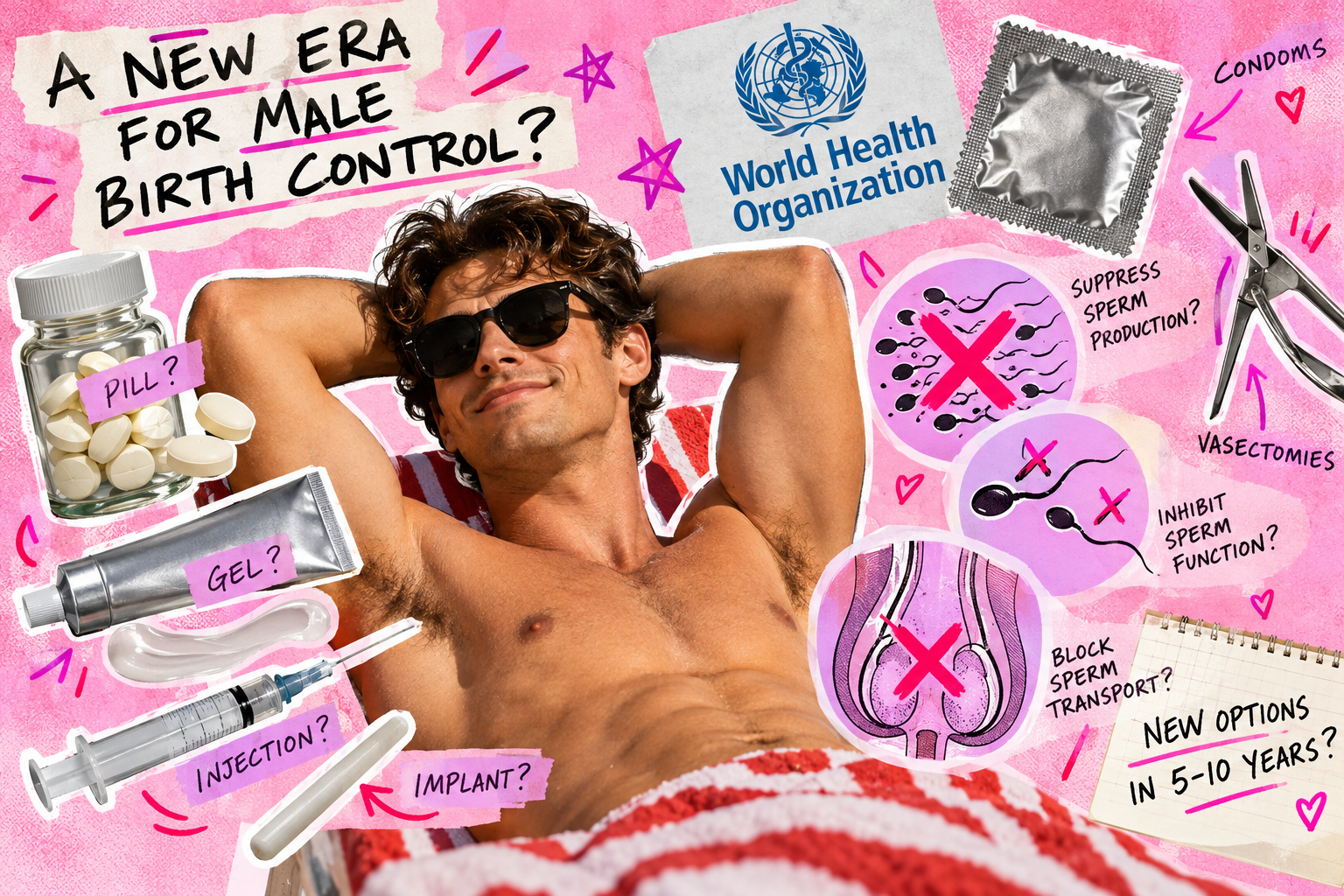
Men currently have two main birth-control options: condoms and vasectomy. The World Health Organization just published a detailed description of what it wants to add to that list, including daily pills and gels, injections lasting up to a year and implants.
The catch: nothing here is approved. According to the Economic Times, which credits a Times of India report, the WHO's first Target Product Profiles for male contraceptives are a framework for researchers, developers and regulators. They set benchmarks for safety, effectiveness, reversibility, acceptability and affordability. Think of it as a checklist for products that don't exist yet.
The profiles cover three ways of preventing pregnancy, per the Economic Times: reducing sperm production, disabling sperm functions needed for fertilization (such as movement), and blocking sperm from reaching the reproductive tract. Products could vary in how often they're used, from daily tablets or gels to injections lasting three, six or 12 months to implants designed to work for at least a year.
For methods that suppress sperm production, the Economic Times reports that the minimum target is for 90% of men to reach a sperm concentration of 1 million or fewer per milliliter within 12 weeks, with a cumulative pregnancy rate of no more than 7% over 12 months. The optimal target is tougher: 95% of men within eight weeks and a 12-month pregnancy rate of 3% or lower. The outlet also says WHO's optimal profile wants sperm levels back in the normal reference range within six months of stopping treatment.
Several candidates are already in clinical trials, according to the Economic Times. RISUG, developed in India, has completed Phase 1 and Phase 2 studies. A hydrogel method called ADAM is in Phase 1. Researchers are also studying hormonal options, including a nestorone/testosterone gel, DMAU and 11β-MNTDC. The Daily Aus adds that a hormonal gel applied daily to the shoulders and upper arms, an injectable hydrogel that blocks sperm and a daily non-hormonal pill called YCT-529 are among the options being tested.
WHO's news release says several promising candidates are in advanced clinical trials, "suggesting that new reversible male contraceptives may be in the market within the next 5-10 years." That is a projection, not a launch date.
WHO also says it has data on whether anyone would use them. Its release says men have relatively few methods under their control, yet around 30% of couples rely on a male method. WHO research cited in the release found more than 75% of surveyed couples would be willing to use a new male contraceptive, and more than 85% of women said they would trust their male partners to take responsibility for contraception. The cross-sectional survey was published in the journal Contraception.
"Contraception isn't one-size-fits-all," said Pascale Allotey, director of WHO's Department of Sexual, Reproductive, Maternal, Child and Adolescent Health and Ageing. "Men and women both need a range of options that reflect what science and innovation can now offer."
The checklist is done. The products, for now, are still in the lab and the clinic.