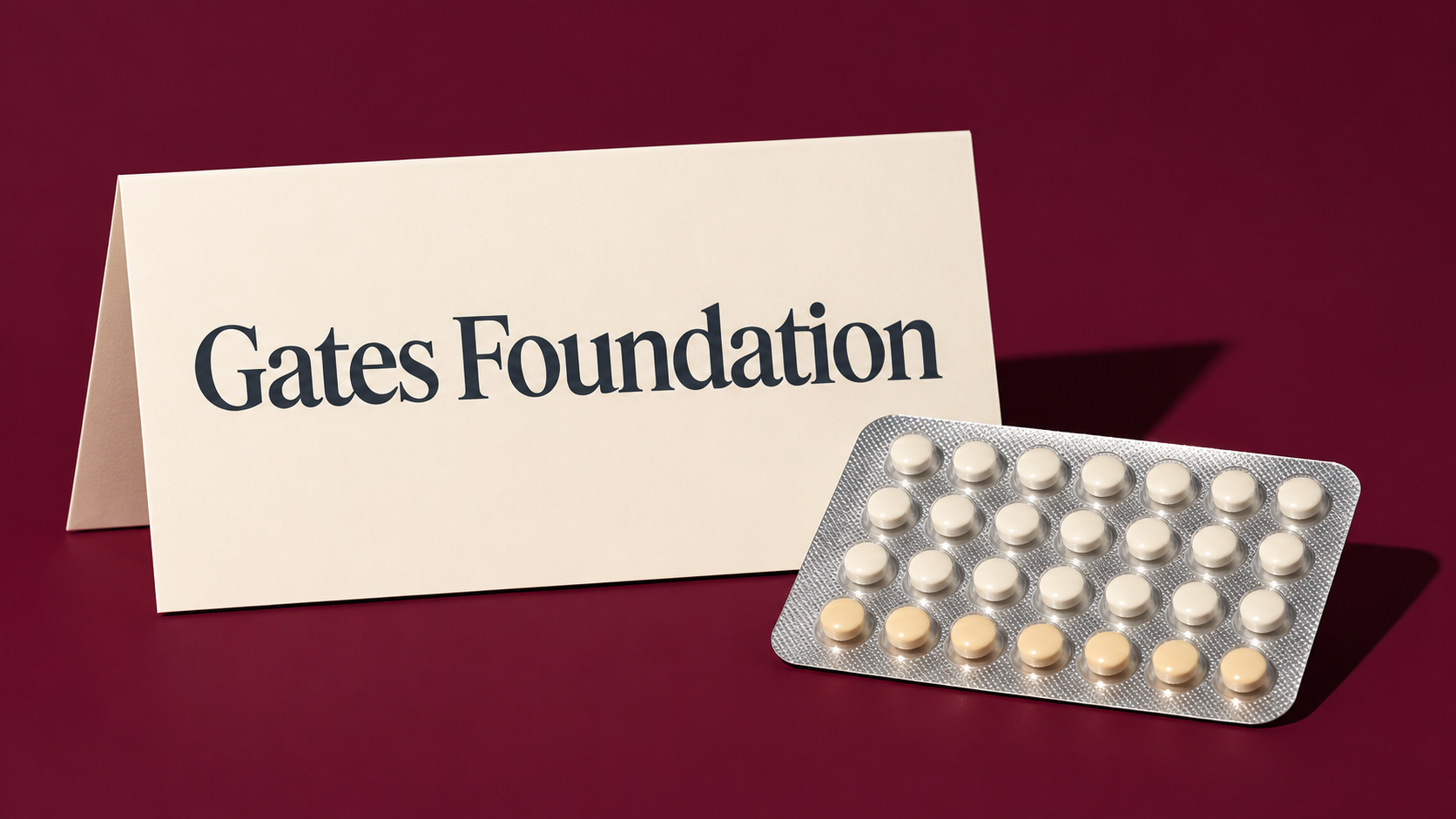
The Gates Foundation plans to commit up to $1 billion through 2030 to expand voluntary contraception access and support women’s health in lower-income countries, it announced Nov. 16 at the Copenhagen Summit on Gender Equality and Women’s and Girls’ Rights.
The commitment covers family planning, maternal and child health, and the systems needed to deliver essential services. It comes in addition to a $2.5 billion women’s health research and development pledge announced in August 2025.
A substantial funding announcement. Now comes the part where the money has to make it past the announcement.
Where the money is headed
The foundation’s planned allocations include:
$694 million for family planning, including voluntary contraception access and services.
$158 million for women’s health innovations, focused on getting new products to women.
$50 million for maternal and child health, supporting essential health supplies through the Global Financing Facility.
$17 million for demographic and health surveys.
$18 million for adolescent outcomes.
Those figures total $937 million. The announcement does not detail an allocation for the balance of the potential $1 billion commitment.
The emphasis on delivery matters. Developing a contraceptive method and making sure someone can actually obtain it are separate assignments. A promising product is considerably less useful when it exists somewhere other than the clinic.
The goal is access—and choice
The foundation describes the investment as support for voluntary family planning: helping people obtain affordable contraceptive methods that meet their needs and preferences. It links that work to its goal of halving maternal and child mortality by 2045.
That distinction deserves attention. Expanding access means giving people more control over whether and when they become pregnant, rather than treating contraceptive uptake as the only measure of success.
A pledge is a starting point
The announcement coincided with a new partnership launched by Denmark, Finland, Iceland, Norway, Sweden and South Africa alongside philanthropic partners. Its priorities include more reliable financing, stronger supply chains and investment in local manufacturing of essential health products.
Together, the Gates Foundation and Children’s Investment Fund Foundation announced approximately $1.9 billion in commitments for sexual and reproductive health and rights over five years, according to FP2030. That combined figure includes the Gates commitment; it is not another pot of money to add on top.
FP2030 welcomed the commitments while emphasizing that funding must reach communities, strengthen country-led financing and sustain local organizations. Its Copenhagen discussions called for transparent spending data and meaningful civil society involvement before budgets are finalized.
The test will be what patients can access—and whether they can keep accessing it.
A press release can announce contraception funding. It cannot fill a prescription.