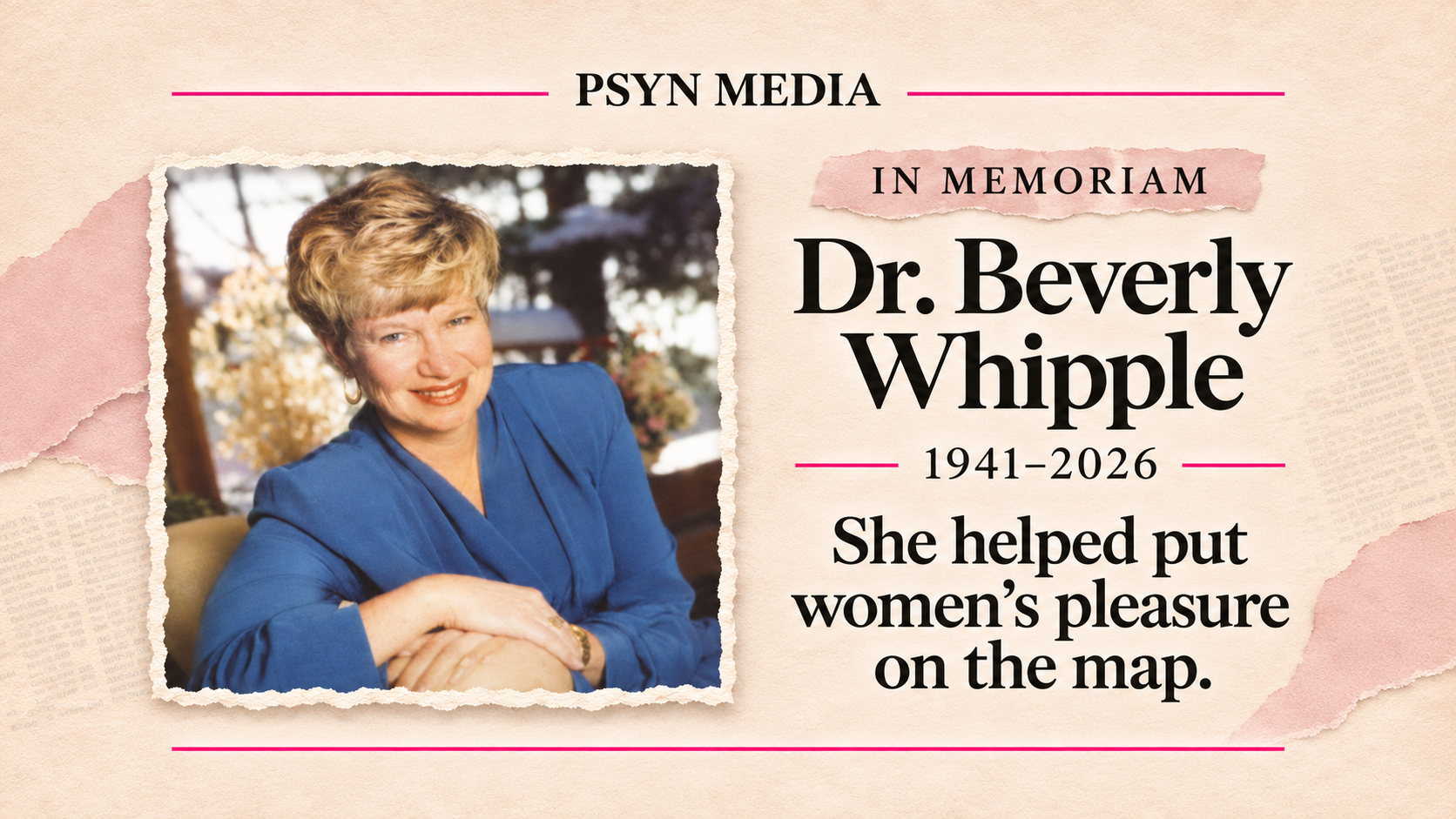
Beverly Whipple, the nurse, psychologist and sex educator whose 1982 book popularized the G-spot, died Monday at her home in Voorhees, New Jersey, at age 85. Her husband, Jim Whipple, said her death resulted from complications of an illness consistent with Alzheimer's disease, according to Time News, which cited the New York Times.
Whipple's path into sex research started with a closed door. In 1975, administrators at West Jersey Hospital in Camden refused to let her include lessons on sexuality in her nursing curriculum. She resigned and started a sex education course at Gloucester County College in Sewell, New Jersey.
Her academic work focused on the neurophysiology of female orgasms. While looking for answers, she found a 1950 article by German doctor Ernst Gräfenberg that documented both female ejaculation and a sensitive area of the vagina. Working with sexologist John D. Perry, she recruited 400 women for a study. At a 1980 meeting of the American Association of Sexuality Educators, Counselors and Therapists, she reported that the volunteers had a sensitive erogenous zone on the vaginal wall between the "11 o'clock and 1 o'clock" positions.
Naming it was its own saga. A colleague suggested the "Whipple Tickle." She said no, because "Mr. Whipple" was already famous for those Charmin toilet paper ads. The pair went with "Gräfenberg spot" instead, later shortened to G-spot.
Her public profile took off in 1981, when she appeared on The Phil Donahue Show and demonstrated the sensitive area on a plastic anatomical model. The 1982 book followed, and she became one of the most recognizable faces in sex education.
Later in life, she moved away from the term she helped make famous. Whipple favored the phrase "clitourethrovaginal complex" to describe how different erogenous zones interact, stressed that sexual pleasure varies from person to person, and cautioned against treating the G-spot as a single goal. In a 2018 episode of the Netflix series Explained, she said: "When you are searching for something as a goal, you are going to miss a lot of pleasure on the way."
Born Beverly Hoehne on June 30, 1941, in Jersey City, she began as a nurse before turning to the study of human sexuality. She graduated from Wagner College and married Jim Whipple in 1962. In 2013, Cosmopolitan named her one of its 10 Sexual Revolutionaries You Should Know.
She is survived by her husband, two children, five grandchildren and one great-grandchild.